




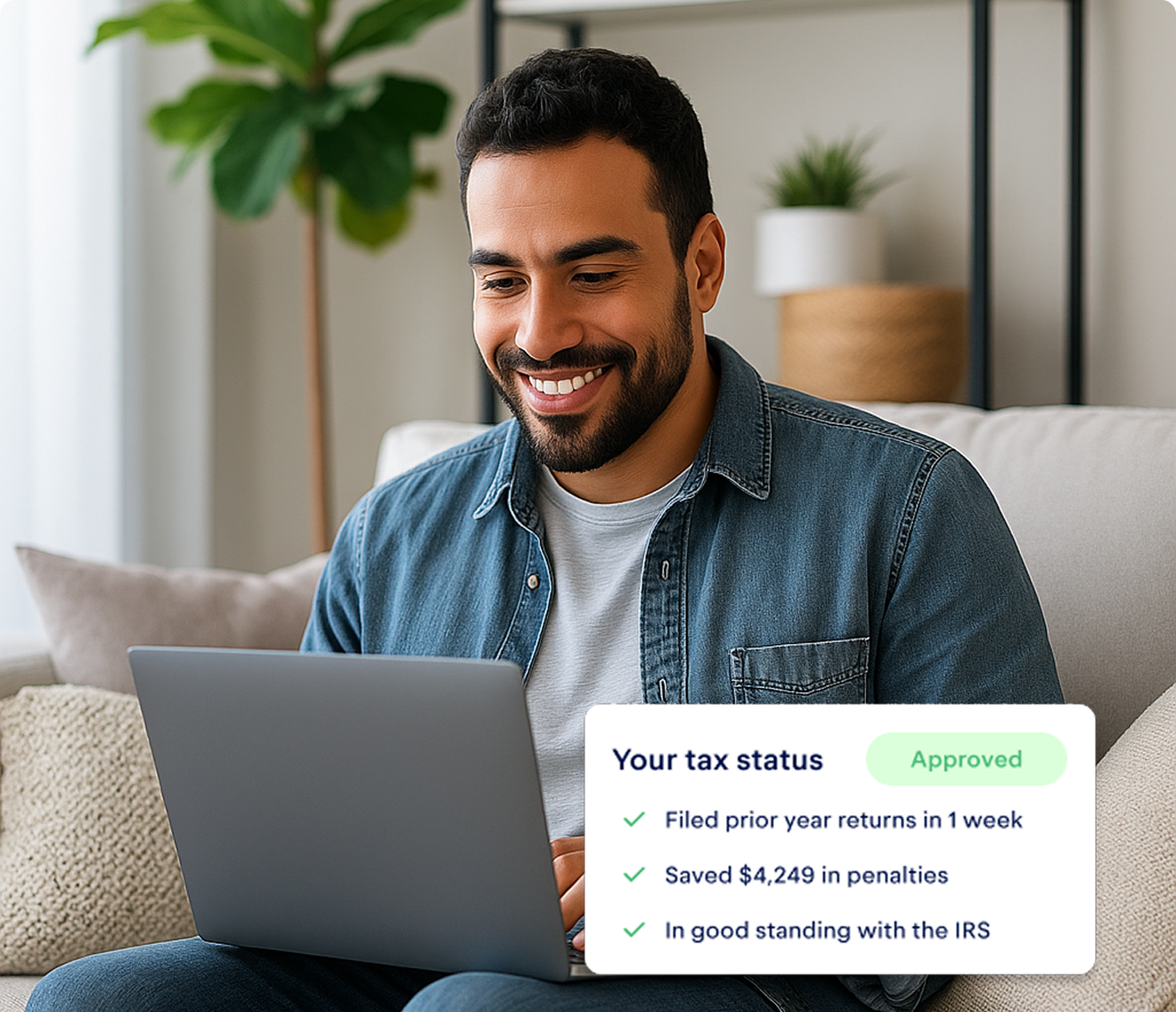

What is the gig economy?
The gig economy is a marketplace for short-term, on-demand work - assignments, jobs, and projects you pick up app-by-app or platform-by-platform instead of through a single employer. For most people the term brings to mind companies like Uber, Fiverr, and Upwork, but it’s much broader than that, covering everyone from rideshare drivers to delivery couriers to freelancers and consultants.
It’s also huge and still growing. According to Statista, 85.6 million people in the US alone will be working as freelancers by the end of 2027. By most estimates, freelancers and independent workers now make up roughly half of the US workforce, and that share keeps climbing as new platforms launch. Clearly, the gig economy isn’t going anywhere.
{filing_upsell_block}
Who are gig workers?
Gig workers are self-employed individuals who work with multiple clients or platforms rather than a single boss. That status changes how you get paid and how you’re taxed (more on that below). Common types include:
- Freelancers: workers performing services for several clients
- Independent contractors: self-employed individuals who often cover responsibilities typically given to employees
- Consultants: subject-matter experts offering guidance to clients
- Temps: workers who take assignments on a short-term basis
- Seasonal workers: people offering temporary services during specific seasons
Pros and cons of gig app work
Gig work isn’t for everyone, but it comes with a real share of plusses. Here’s the honest trade-off.
It's easy to get started
There’s a very low barrier to entry. You don’t need to invest time and money in a degree, and most gig apps need little more than a smartphone, a background check, and (for driving gigs) a valid license.
You can set your own hours
As a gig worker, you set your own schedule. Working around school, a day job, or caretaking responsibilities. Virtually every gig job offers a flexible schedule, and some even let you work from home or anywhere in the world.
There's a lot of variety in the work
You can find different kinds of jobs in virtually every sector, so there’s something for almost everyone. If you hate the idea of a mundane job where every day looks the same, the variety in gig work is a real plus.
But you handle your own taxes
The trade-offs: gig jobs don’t come with employee benefits like health insurance, paid time off, or an employer 401(k) match. And you handle your own taxes. As a contractor, you pay self-employment tax (15.3%) on top of income tax, because there’s no employer covering the other half of Social Security and Medicare. To be clear, it’s not a “higher tax rate”. It’s just the part W-2 workers never see, because their employer handles it for them. But it does mean you should set aside roughly 25–30% of your earnings for taxes. Estimate yours with Keeper’s 1099 tax calculator.
The 16 best gig work apps in 2026
From classic rideshare to grocery delivery to online freelancing, here are the platforms worth your time this year. Each entry lists who it’s best for, typical pay, what you need, and where it works.
1. Lyft - best for the classic rideshare experience
The main alternative to Uber, active in nearly every US city. If Uber alone isn’t sending you enough rides, adding Lyft is the simplest way to boost your hours behind the wheel. Lyft also offers bike and scooter sharing in some markets.
Typical pay: varies by market and tips · Need: valid license, eligible vehicle, background check · Where: nationwide · Tax form: 1099-NEC and/or 1099-K
2. Instacart - best for the highest earning potential
Get paid to grocery shop. Instacart hires full-service shoppers (who shop and deliver) and in-store shoppers. Experienced full-service shoppers in busy metros report some of the highest earnings in the gig economy, especially at peak hours. The catch: full-service shoppers absorb fuel costs, so batch orders from the same store to protect your margins.
Typical pay: $16–$22+/hour plus tips · Need: 18+, smartphone, ability to lift groceries · Where: nationwide
3. DoorDash - best for steady, never-ending demand
The largest food delivery platform in the US, which means consistent orders. Dashers see the guaranteed base pay before accepting, and most earn solid money once tips and bonuses are factored in.
Typical pay: ~$17–$28/hour with tips · Need: car, bike, or scooter (varies by market), license, background check · Where: nationwide · Note: DoorDash also fulfills orders for Caviar, its premium restaurant brand; there’s no separate Caviar driver app as Caviar orders come through your DoorDash account.
4. Uber Eats - best for bike or scooter delivery
Uber’s delivery arm has matured: you can preview your destination and payout before accepting. Base pay runs low, so the upside is in tips and bonuses, but Uber Eats is one of the few apps that lets you deliver by bike or scooter in most markets, making it accessible without a car. Uber Eats also now fulfills Postmates orders, since Uber retired the standalone Postmates driver app and folded couriers into Uber Eats.
Typical pay: $15–$19/hour plus tips · Need: car, bike, or scooter; background check · Where: nationwide
5. Grubhub - best for choosing the most convenient orders
The Grubhub experience shows the full payout (including tips) and destination before you accept, so you can cherry-pick. Demand is lower than DoorDash, and orders can come through before the restaurant has started cooking, so expect some wait time.
Typical pay: per-order, varies · Need: car, license, background check · Where: nationwide
6. Shipt - best for picking your own grocery jobs
A grocery delivery app (owned by Target) where shoppers choose from a central pool of orders rather than getting assigned. You’ll see the payout, location, and item count up front — but you have to deliver within about an hour of accepting.
Typical pay: per-order plus tips · Need: 18+, reliable car, background check · Where: nationwide
7. Amazon Flex - best for avoiding passengers and food smells
Pick up Amazon packages from a local depot and deliver them in scheduled blocks. You’re paid per block (and only for successful deliveries), with no passengers or food to deal with. Amazon Flex drivers like the predictability of fixed shifts.
Typical pay: $18–$25/block-hour (varies) · Need: car, 21+, valid license · Where: many US metros
8. Walmart Spark - best for high-volume delivery demand
One of the largest delivery gigs in the country now. Spark drivers deliver Walmart groceries and general merchandise, choosing from offers that show pay and distance before you accept. Strong order volume thanks to Walmart’s footprint.
Typical pay: per-offer plus tips · Need: 18+, car, license, insurance · Where: most of the US
9. Roadie - best for long-distance hauls
A UPS-owned delivery app (acquired in 2021) where couriers drop off everything from prescriptions to furniture. Its niche is long-distance hauling, so you can stack a delivery onto a side hustle road trip you’re already taking. For example, a delivery heading the same direction as your weekend drive.
Typical pay: per-gig, higher for long hauls · Need: car/truck, license · Where: nationwide
10. TaskRabbit - best for non-driving gig work
The standout for work that isn’t about driving. “Taskers” handle moving, mounting, cleaning, errands, and, most popular of all, furniture assembly (IKEA bought TaskRabbit in 2017 for exactly this reason). The big perk: you set your own prices, and your rate power grows as you build reviews.
Typical pay: you set it; skilled taskers command premium rates · Need: relevant skills, background check · Where: major US cities
11. HopSkipDrive - best for higher pay driving young passengers
“Uber for kids.” Parents and schools book rides for children, and the vetting is more rigorous than standard rideshare (you’re driving minors). In exchange, pay tends to run higher than typical rideshare.
Typical pay: above standard rideshare (check current rate in-app) · Need: caregiving experience, rigorous background check, eligible vehicle · Where: CA, CO, VA/DC/MD, TX (Houston, Dallas–Fort Worth), AZ, WA, PA, WI, Las Vegas
12. Hitch - best for intercity drivers who love the open road
A city-to-city rideshare/carpool app. You list your route, pick up passengers heading the same way, and subsidize your travel costs. Started in Texas and has been expanding to additional intercity routes. Check the app for current coverage before you rely on it.
Typical pay: per-trip, route-dependent · Need: valid license, eligible vehicle · Where: Texas and select intercity routes
13. Upwork - best for online freelance contracts
An online marketplace where businesses hire freelancers for writing, design, development, marketing, admin work, and more. You bid on projects, build long-term clients, and get paid through the platform. You’ll only receive a 1099-K if you cross the reporting threshold, but all earnings are taxable regardless.
Typical pay: you set your rate; varies widely by skill · Need: a marketable skill and a strong profile · Where: remote, worldwide
14. Fiverr - best for selling productized services
Instead of bidding on jobs, you list fixed-price “gigs” (logo design, voiceovers, writing, video editing, and more) that clients buy directly. Great for creative and digital freelancers who want to package their work and reach a global audience.
Typical pay: you set package prices · Need: a marketable skill and a clear gig listing · Where: remote, worldwide
15. Instawork - best for on-demand hourly shifts
Instawork connects workers with short-term shifts in hospitality, warehouses, events, and retail. You browse and claim shifts that fit your schedule, often with no car required, making it a flexible option for steady hourly work.
Typical pay: hourly, set per shift · Need: 18+, relevant work eligibility · Where: many US metros
16. Rover - best for pet care
Get paid to care for animals through dog walking, boarding, drop-in visits, and pet sitting. You set your own rates and services, and repeat clients can turn it into steady recurring income.
Typical pay: you set your rates · Need: reliability and a love of animals; background check · Where: nationwide
A few apps to also consider: Veho and GoPuff (delivery), Wonolo (on-demand shift work), and Wag (dog walking and pet sitting). New platforms launch constantly! The best strategy is often multi-apping: running two or three at once to cut downtime between orders.
5 tax tips for gig work taxes
As an independent contractor earning 1099 income, the IRS considers you someone who "works for yourself". That means you’re responsible for your own taxes, and you're on the hook for self-employment taxes. Self-employment tax, more commonly known as FICA (Federal Insurance Contributions Act), actually comprises of two taxes: Social Security and Medicare for a total rate of 15.3%.
You can use Keeper's handy self-employment tax calculator to see how much you could expect to pay (or get back) in taxes.
Now, let's dive into a few other items you should know about for taxes.
1. You owe tax even without a tax form.
A 2025 law (the One Big Beautiful Bill) restored the 1099-K reporting threshold to $20,000 and more than 200 transactions for 2025 and beyond, far above the $600 floor that had been planned. Many gig workers won’t receive a 1099-K anymore, but remember that all gig income is still taxable whether or not a form shows up!
2. Write off your business expenses to lower your taxable income.
Self-employment taxes are assessed on your net income, meaning your income after eligible business expenses have been deducted. So the best way to lower your tax bill is to lower your net income by deducting everything you’re spending to run your business.
Anyone self-employed can deduct business expenses. You don’t need an LLC to claim these write-offs. You’ll fill out these expenses on your Schedule C, which self-employed people use to report their income and expenses.
Some common business expenses for freelancers and gig workers include:
- 🏠 Home office expenses
- 🚗 Car expenses
- 📱 Cell phone
- 🌐 Internet
- 💻 Computers and electronic accessories (chargers, adapters, etc.)
- 💽 Subscriptions like Canva, ChatGPT, Claude
- 🚗 Auto expenses
- 💻 Platform fees, from Shopify to Patreon
- 📚 Continuing education
Most write-offs are missed because people don’t keep track of what they buy for work. In the frenzy to pull everything together before taxes are due, eligible write-offs tend to fall through the cracks.
{write_off_block_v2}
If you’re wondering where to start with this, you’ve come to the right place. The Keeper app is specifically designed for gig and freelance workers in the United States.
The app will find and sort all of your business write-offs automatically. When you’re ready to file, all you have to do is upload your 1099s and we’ll handle the rest.
A note on car expenses.
You can choose to track your actual vehicle expenses (gas, maintenance, car insurance, etc.) or claim the standard mileage deduction (which is 72.5 cents per mile in 2026). The method you choose should depend on what gets you the better deduction! You can learn more by reading Keeper's tax guide on choosing between the standard mileage deduction vs the actual expenses method.
If you're set on tracking your mileage, here's a free mileage tracker. Hope that helps!
3. Take advantage of no taxes on tips!
For 2025 through 2028, eligible workers can deduct up to $25,000 in qualified tips, as long as your job falls under the IRS's classification of an occupation that customarily and regularly receives tips. For example, rideshare drivers and servers are amongst ~70 qualifying jobs.
The most common types of tips are credit card, debit card, or cash tips left when a customer pays their bill. But non-cash gratuities (like tickets to sporting events or gift cards) are also considered tips.
Remember that anything you receive that has a value is considered a tip if it’s:
- ✓ Not mandatory based upon company policy
- ✓ Determined by the customer making the payment
4. Don’t forget the QBI deduction.
The 20% Qualified Business Income (QBI) deduction was made permanent in 2025, letting eligible self-employed workers deduct up to 20% of their business income. Note that the QBI deduction doesn't lower your self-employment tax - it only lowers your income tax. To lower your self-employment taxes, make sure to write off your business expenses!
5. Make estimated quarterly tax payments if you’ll owe $1,000+.
Most gig workers earning meaningful income need to be making estimated payments four times a year (January 15, April 15, June 15, September 15) unless:
- You expect to owe less than $1,000 when you file your taxes, or
- You had no tax liability for the prior year
Use Keeper’s quarterly tax calculator to figure out if you need to make estimated payments and how much you'll owe.
{upsell_block}
FAQs
Which gig app pays the most in 2026?
For delivery, Instacart (full-service shoppers) and DoorDash tend to top the list, with experienced workers in busy metros earning $20–$30/hour at peak times. For rideshare, Uber and Lyft lead. Actual pay depends heavily on your market, hours, and tips, so most high earners run multiple apps.
Do gig apps report my income to the IRS?
Often, yes, but the threshold changed. For 2025 and later, payment apps only have to issue a 1099-K when you exceed $20,000 and 200 transactions. Delivery and rideshare platforms may also issue a 1099-NEC. Either way, you owe tax on all your gig income even if you never receive a 1099 form. Check out Keeper's guide on what to do if you didn't receive a 1099 tax form.
Do I have to pay taxes on gig work?
Yes. Gig income is self-employment income. On top of regular income tax, you pay the 15.3% self-employment tax (Social Security and Medicare). As a general rule of thumb, set aside roughly 25–30% of your earnings, and reduce the bill by writing off your business expenses. Use Keeper's 1099 tax calculator to calculate how much to set aside for taxes.
What's the standard mileage deduction for 2026?
72.5 cents per business mile, up from 70 cents in 2025. Keep a mileage log throughout the year. Here's Keeper's free mileage log.
Can rideshare and delivery drivers claim the "no tax on tips" deduction?
Rideshare drivers are on the IRS’s list of tipped occupations and can claim the deduction (up to $25,000 for 2025–2028) if they meet the rules. Just remember to keep a record!
Over 1M Americans trust Keeper for their complex taxes
Keeper is the #1 tax app for freelancers and businesses-of-one. Capture every deduction, credit, and tax-saving opportunity with expert review on every return.


Sign up for Tax University
Get the tax info they should have taught us in school

Track and claim every eligible deduction with Keeper
Keeper is the top-rated all-in-one business expense tracker, tax filing service, and personal accountant.


What tax write-offs can I claim?
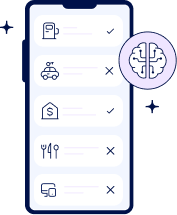
What tax write-offs can I claim?
Discover effortless tax savings, with Keeper Tax

File complex taxes confidently



Tax Write-Offs 101: Keep More of What You Earn
Everything that freelancers, independent contractors, and new business owners need to know about deducting business expenses on your taxes, plus a live Q&A
Recommended Videos
More Articles to Read


