
27 Tax Write-Offs for Beekeepers
NAICS business codeYour NAICS business code is a six-digit string of numbers that shows the type of work your business does. NAICS stands for North American Industry Classification System. When you do your taxes, you'll enter it in Box B of your Schedule C.112900
 Reviewed bySabrina Wiechart, CPASabrina is a Certified Public Accountant (CPA) with over 15 years of experience in tax preparation, planning, and S-Corp compliance. She holds a Master’s in Accounting and specializes in helping self-employed individuals make smart tax decisions. Sabrina is passionate about simplifying the S-Corp process and making sure every client keeps more of what they earn.
Beekeeping is a delicate balance: keeping the temperature just right, making sure the hive is free of disease and parasites, protecting their valuable honey from sneaky bears and other predators. It’s understandable why you might not want to even think about taxes after that, but it’s a sad reality for us worker drones.
Fortunately, there’s an easy way to sweeten your tax bill! By claiming the ordinary expenses you run into all the time as you repair hives, replace your smoker, or buy new ice packs for your stings, you can significantly lower what you owe on your taxes. Now that’s something to buzz about!
Any supplies needed to keep your colonies alive and flourishing are write-offs.
Each year you can deduct part of the cost of the equipment you bought for work, spread over its useful life.
Any maintenance or repairs needed for your equipment to operate are fully deductible.
Bubble mailers, boxes, tissue paper and more: anything you buy to ship customer orders is a write-off.
Equipment like extractors to get honey or beeswax are fully deductible.
Jars, lids and labels you use to package your honey are deductible.
Classes you take to enhance your skills after getting your license are tax write-offs.
This covers training that maintains or improves skills for the work you already do. Courses that qualify you for a new trade or profession are not deductible.
Protective gear to wear when handling the bees is a tax write-off.
Purchasing bee colonies to grow your business can be written off.
The plants you buy for bees to pollinate can be written off.
Treats to reward animals for good behavior, or to play with them, are tax-deductible.
Many states require you to register your hives — those registration and permit fees are deductible.
Paying a landowner or farm to host your hives is deductible as rent.
Write off the fees you pay to contract labor to help you complete projects.
Pay any one contractor $600 or more in a year and you'll need to file a Form 1099-NEC for them.
Farmers market stall fees and online marketplace vendor fees are write-offs.
If you drive for work ...
Beekeeping is busy work. If your work finds you driving to relocate hives or pick up supplies, remember that car-related expenses can be written off your taxes.
Parking for a meeting downtown, or any other work trip, is tax-deductible!
A toll while driving to or from a work destination is tax-deductible!
If you buy a new car, you can write off part of the cost every year for five years.
Flashlights, tire iron, duct tape, and other tools you may need in your vehicle are deductible.
Car insurance monthly fees, registration, even roadside assistance are partially deductible — if you use the actual expense method. The standard mileage rate already covers them.
Oil changes, repairs, and regular checkups are deductible if you use the actual expense method. Take the standard mileage rate instead and they're already baked into your per-mile deduction.
If you discuss work at a restaurant ...
As long as the conversation centers around work, the IRS lets you write off the cost of grabbing food or drinks with potential partners or fellow beekeepers.
If you discuss work with a coworker, mentor, client, or prospective client, it's a write-off — 50% of the tab.
If you leave town for work ...
If work-related events take you out of town, like a beehive relocation or an industry conference, you can deduct your travel expenses from your taxes.
Planes, trains, and car rentals are all work-related travel costs that can be written off.
When you travel for work, lodging expenses such as hotel rooms or Airbnb are write-offs.
When you're traveling for work, your meals are 50% deductible — takeout included. (Long-haul truck drivers subject to DOT hours-of-service rules can deduct 80%.)
If you work from home ...
There are a (honey)bunch of work responsibilities a beekeeper might take care of remotely: setting up beehive storage, conducting industry research, or managing finances and paperwork. Don't forget to write off your home office expenses!
A desk, chairs, lamps, and other home office necessities are all tax write-offs. Anything over about $2,500 gets depreciated on Form 4562 instead of written off all at once.
Repairs just for your home office are 100% deductible. Repairs to the rest of your home count too, prorated by your business-use percentage on Form 8829.
Gotta keep the lights on in your home office! A portion of your electricity bill counts.
Whether it's rental or homeowners insurance, you can write off a portion through your home office deduction.
It'd be hard to work in an office without running water, huh? Your water bill counts.
You need internet to do your job! If you claim a home office, deduct it prorated on Form 8829 along with your other utilities. Internet you pay for on the road, purely for work, is 100% deductible.
You may also enjoy learning about:
Can I Take the Standard Deduction and Deduct Business Expenses?
Pro tip for freelancers and independent contractors: You can — and should — write off your business expenses on top of the standard deduction. Here's how.
 By Soo Lee, CPA
Everything You Need to Know About the Business Travel Tax Deduction

Receipts for Taxes: What Do You Need to Keep?

What Education Expenses Are Tax-Deductible in 2026?

The Business Meal Deduction: A Freelancer's Guide

Ultimate Guide to Car Tax Deductions and Mileage
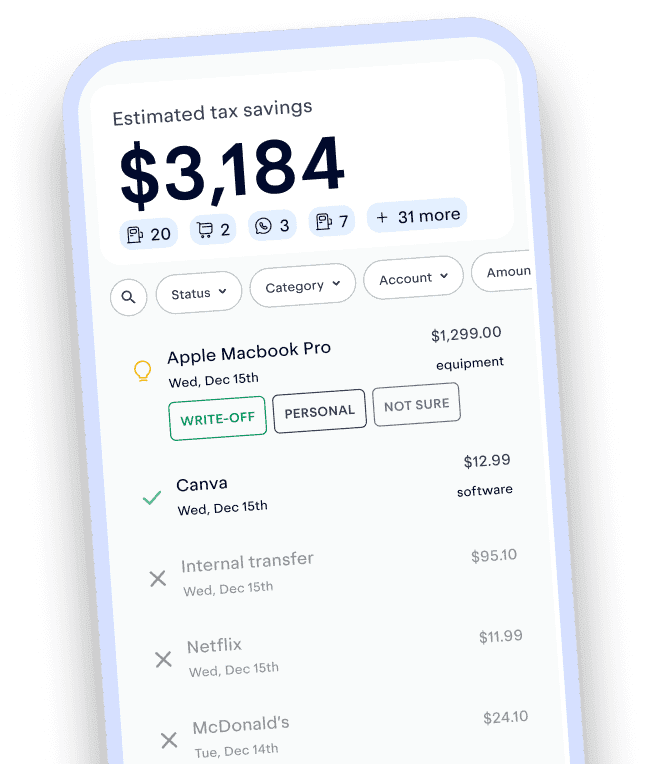
Track and claim every eligible deduction with Keeper
Keeper scans your accounts for write-offs and files your return — with tax pros reviewing every one.
Try it free